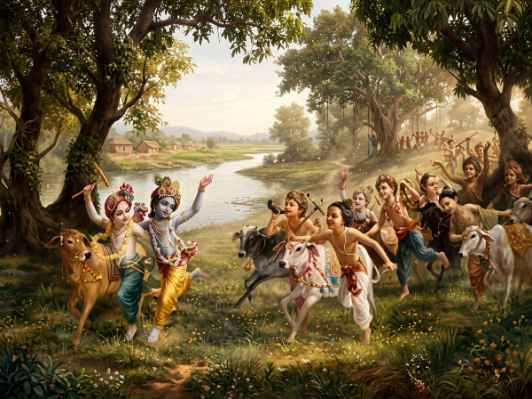
Krishna Leelas are not mere mythologies; they are the spiritual saga that combines devotion, philosophy, and psychology. In various traditions, in particular the Vrindavan tradition, the Krishn leelas are perceived as a living reality and not merely a story of past times. These leelas are a code to understanding love, egoism, surrender, and divine play.
There are several popular stories of Lord Krishna including that of Govardhan Leela, Putna vadh, and many others but in this article, we will focus particularly on Daan Leela, Maan Leela and Damodar Leela.
Table of Contents
About the Krishna Leelas
Unlike a linear story, Krishna Leela unfolds as interconnected divine episodes—each revealing a different dimension of consciousness, devotion, and the relationship between the soul and God.
Daan Leela: A Playful Toll That Reveals Love, Ego, and Surrender
Daan Lila is one of the most meaningful parts of Krishna’s life, where Krishna playfully stops the gopis on their way and asks them to pay “daan” (a kind of toll). On the surface, it feels like harmless mischief—but there’s a deeper message hidden in it.

See more content on our Youtube
The gopis react in different ways. Some don’t even recognize Krishna and argue with Him—this reflects a tamasic (ignorant) mindset. Some accept Him but only on their own terms, showing a rajasic (conditional) form of love. And then there are those who happily offer everything, trusting Him completely—this is the satvik (pure) state of surrender.
There’s also a beautiful emotional layer to this leela. It is believed that Krishna didn’t want the hard-earned butter and milk of Vrindavan to go to an unjust ruler like Kans. So, in His own playful way, He began collecting the “toll” Himself—protecting His people while staying close to them.
Behind this naughty act was love and concern for His people. And that’s what makes this Leela so special—it reflects real human behavior too. We often resist letting go of control, until life teaches us the value of trust and surrender.
Also Read: 5 Leadership Lessons from Indian Epics: Learn from Rama and Arjuna
Maan Leela: When Love, Emotions, and Separation Deepen Devotion
Maan Lila shows the emotional side of divine love through Radha and her state of “maan.”
This is not normal anger. It’s a soft, emotional response that comes from deep love. In Krishna’s life, this kind of temporary distance actually makes the bond stronger. In Bhakti, it is believed that separation increases the sweetness of reunion.

One beautiful part of this leela is when Krishna disguises Himself as a veena-playing woman just to come close to Radha and calm her maan. This shows how the divine understands emotions and responds with care, not force.
This Leela reminds us that even in the highest form of love, emotions, misunderstandings, and healing all play a role. It also reflects a deeper idea—that true connection is not about avoiding emotions, but understanding and transforming them.
Also Read: Arjuna as Brihannala: The Tale of Duty, Disguise, and Transformation in Hindu Mythology
Damodar Leela: When a Mother’s Love Binds Krishna
Damodar Leela is one of the most heart-touching parts of Krishna’s tales, where little Krishna is tied by His mother, Yashoda, after He mischievously breaks a butter pot and feeds it to monkeys.

When Yashoda tries to tie Him with a rope, something strange happens—the rope is always two inches short, no matter how much she adds. In spiritual understanding, these two inches represent human effort and God’s grace. Only when both come together does Krishna allow Himself to be bound.
This leela, beautifully described in the Shrimad Bhagavatam, carries a simple but powerful message: God is not controlled by strength or authority, but by pure love.
Even today, during the Kartik month, devotees—especially through communities like ISKCON—remember this leela by lighting diyas and offering prayers, celebrating the idea that love is what truly connects us to the divine.
Also Read: Ramayana/ Mahabharata Character Analysis: Crownless Legends of Indian Epic Characters
Key Lessons from Krishna Leelas
These leelas by lord Krishna is structured teaching through storytelling. Each leela represents a step in spiritual growth.
• Daan Lila teaches surrender and humility
• Maan Lila reveals emotional depth in love
• Damodar Lila proves devotion is stronger than power
Together, these Vrindavan Leelas map a journey—from ego to unconditional love and ultimately to liberation. These teachings also align with modern psychological ideas like emotional awareness and letting go of control.
Also Read: Amish Tripathi Books and Best Works: Complete Guide 2026
What Are the Scriptural Proofs Behind Krishna‘s tales?
Krishna Leelas are deeply rooted in classical Hindu scriptures and theological texts. The Bhagavad Gita explains Krishna’s divine nature and philosophy, while the Shrimad Bhagavatam narrates His leelas in detail. Scholars like Rupa Goswami further expanded on these concepts.
Sacred sites in Vrindavan are also considered physical reflections of these events. While modern perspectives may seek empirical proof, devotees experience these leelas as spiritual realities.
Also Read: Truths Behind Gandhari’s Curse & Krishna’s Fall (2026)

Shri Radha-Krishna‘s Other Vrindavan Leelas: Beyond Daan, Maan, and Damodar
Krishna’s life feels incomplete without Radha, who represents the purest form of love and devotion. Along with Krishna, she forms the heart of all Vrindavan Leelas. Beyond Daan, Maan, and Damodar Leela, there are many other beautiful leelas that carry deep meaning:
• Govardhan Leela – shows faith and how Krishna protects His devotees
• Makhan Chor Leela – reflects innocence, playfulness, and childlike charm
• Ras Leela – represents the highest connection between the soul and God
All these leelas are connected. Each one expresses a different shade of love, devotion, and divine play, but together they create a complete spiritual picture.
Krishna is often called “Bhakta-Vashya,” meaning He becomes bound by the love of His devotees. This is the central idea of leelas—that pure devotion has the power to connect directly with the divine.
Also read: Ashwatthama’s Gem: Curse, Powers & Mahabharata Mystery 2026
FAQs
What is Krishna Leela in simple words?
Krishna Leela refers to the divine pastimes of Krishna that convey spiritual lessons through symbolic stories. These include acts of love, mischief, and devotion that help explain deeper truths about life and the nature of God.
Why is Daan Leela important in Krishna Leela?
Daan Lila shows how individuals respond to divine authority based on their inner state. It teaches surrender, humility, and the importance of recognizing divine protection in everyday life.
What does Maan Leela teach about Shri Radha?
Maan Leela highlights Shri Radha’s deep and pure love, where even emotional distance enhances devotion. It shows that divine love includes emotional complexity and spiritual refinement.
What is the main message of Damodar Leela?
Damodar Leela teaches that love binds God more than power. It emphasizes the importance of sincere effort combined with divine grace in spiritual growth.
Are Krishna Leelas historically proven?
They are described in scriptures and supported by devotional traditions. While not scientifically proven, they hold deep spiritual and cultural authenticity for followers.
Final Thoughts
Krishna Leela is more than storytelling—it is a guide to understanding life, emotions, and devotion. Whether it is Daan Lila’s lesson on surrender, Maan Leela’s emotional depth, or Damodar Leela’s message of love, each narrative offers timeless wisdom.These Vrindavan Leelas do not demand blind belief—they invite reflection, connection, and inner growth.
If you want to explore spirituality in a way that feels real and relevant, Krishna’s tales offers a path that is both ancient and deeply practical. Follow for more insightful breakdowns of spiritual concepts that connect tradition with modern life.
We’re excited to kick off our Saturday Book Review series—a dedicated space for honest, insightful reads curated for passionate readers. If you enjoy magical worlds, layered storytelling, and emotionally driven narratives, this is something worth following. Join Saturday Reads Club for free!