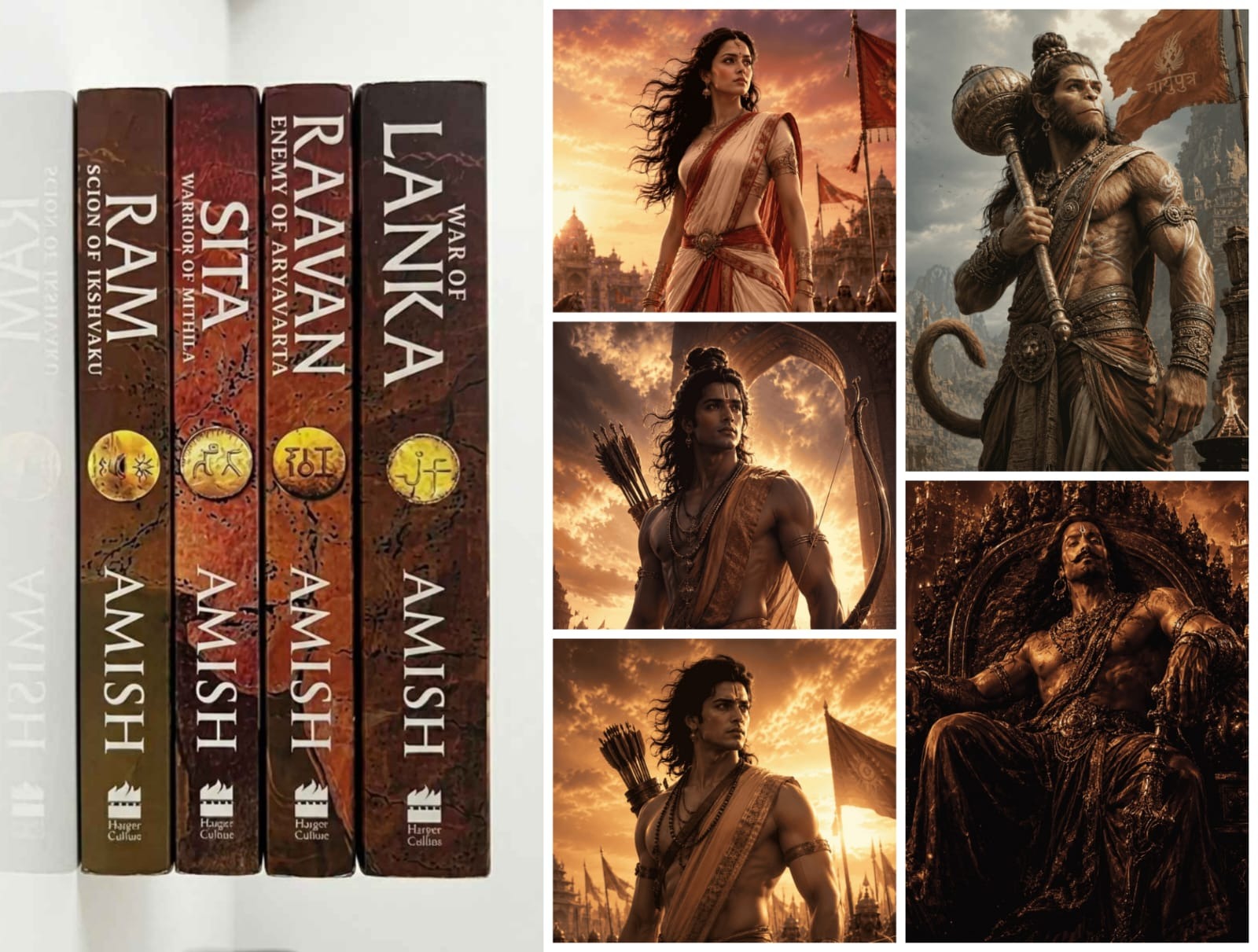
This page may contain affiliate links. Purchases made through these links may earn a small commission at no additional cost to you. This helps support the platform and maintain high-quality content.
Ravana is often reduced to a villain burned every year during Dussehra. But that version barely scratches the surface. The truth is more layered—and more uncomfortable. His story is not just about good vs evil; it’s about how brilliance collapses under unchecked ego.
From mastering sacred knowledge to defying the gods, Ravana stands as one of the most complex figures in the Ramayana. His rise was extraordinary. His fall was avoidable. In this post you’ll learn about 5 biggest Ravana’s mistakes leading to his end.
Table of Contents
About King Ravana
Ravana, the ten-headed king of Lanka, represents a paradox—scholar and tyrant, devotee and defier. His story blends intellect, devotion, and destructive pride, making him one of mythology’s most psychologically layered characters.
Ravana’s Biggest Mistake: Ego (Ahamkara) and Arrogance

At the core of Ravana’s mistakes lies ahamkara—a deep-rooted ego that distorted his judgment. Ravana wasn’t ignorant. He was a master of the Vedas, a skilled musician, and a devoted follower of Lord Shiva. But knowledge without humility becomes dangerous. That’s exactly what happened.
His ego pushed him to:
- Conquer kingdoms without restraint
- Defeat celestial beings
- Believe he was beyond consequence
The turning point? He underestimated Rama—seeing him as just a human. That single misjudgment defines Ravana’s mistakes more than any battle. Ego didn’t just blind him. It isolated him from truth.
#ad

Read: RAVANA’S KINGDOM THE RAMAYANA AND SL HISTORY by J.W. Henry
See best Mythology Content on our Youtube
Ravana Kailash Story: Challenging Lord Shiva
The Ravana Kailash story perfectly captures the tension between devotion and arrogance. Driven by pride, Ravana attempted to lift Mount Kailash—the sacred home of Lord Shiva. It wasn’t an act of worship. It was a display of dominance.

Shiva responded simply—by pressing the mountain down with his toe.Trapped beneath it for years, Ravana finally surrendered. In pain and realization, he composed the powerful Shiva Tandava Stotra. This moment is crucial. It shows that Ravana could recognize humility—but only under extreme consequences.
Shiva forgave him and granted the Chandrahasa sword. But forgiveness didn’t erase Ravana’s nature. The lesson was temporary. The ego remained. This episode is often misread as devotion. It’s actually a warning: devotion without surrender is just disguised arrogance.
Also read: 5 Leadership Lessons from Indian Epics: Learn from Rama and Arjuna
Ravana Real Story and Kidnapping Sita
The Ravana real story becomes irreversible with the abduction of Sita. This wasn’t a random act. It was fueled by:
- Revenge for Surpanakha
- Desire and control
- A need to assert dominance

Ravana used deception—disguising himself as a sage. This detail matters. In dharmic context, misusing a sacred identity is considered a grave moral violation. He abducted Sita and kept her in Ashoka Vatika. Importantly, due to past curses, he never touched her without consent. But restraint does not equal righteousness. The act itself broke dharma.
This decision triggered:
- Hanuman’s entry into Lanka
- Rama’s alliance with the vanaras
- The eventual war
Ravana didn’t lose because of strength. He lost because he crossed a moral boundary he couldn’t recover from.
#ad

Get Valmiki Ramayana Box Set at best prices.
Also read: Why Bhima Killed Kichaka: The Brutal Justice for Draupadi
Ravana’s Boons and Underestimating Humans
Ravana’s boons are central to understanding his downfall. After intense penance, he received blessings from Brahma:
- Immunity from gods, demons, and celestial beings
- Extraordinary strength and knowledge
- Near invincibility

But here’s the flaw—Ravana excluded humans and animals from his protection. Why? He didn’t consider them a threat. That oversight is the most strategic mistake in Ravana’s story.
Rama, an avatar of Vishnu in human form, used this exact loophole. Alongside vanaras like Hanuman, he dismantled Ravana’s seemingly perfect defense. Ravana’s boons didn’t fail him. His assumptions did. It’s a classic case of overconfidence: when you ignore the “small risks,” they become decisive.
Also read: Discover 3 Hidden Krishna Leelas That Explain Love, Ego, and True Devotion
Ravana and Vibhishana: Ignoring Wise Advice and Good Counsel
If there’s one moment where Ravana could have changed his fate, it was when Vibhishana advised him to return Sita. Vibhishana wasn’t weak. He was rational. He warned Ravana about:
- The consequences of adharma
- Rama’s true nature
- The limits of his boons

But Ravana dismissed him. Not because the advice was wrong—but because it challenged his ego.Eventually, Vibhishana defected and joined Rama. This wasn’t betrayal. It was alignment with dharma. Ravana didn’t just lose a brother. He lost:
- Strategic insight
- Moral grounding
- Internal stability
Ignoring wise counsel is a recurring theme in Ravana’s mistakes. Power isolates those who refuse to listen.
Also read: Arjuna as Brihannala: The Tale of Duty, Disguise, and Transformation in Hindu Mythology
Lessons from Ravana’s Mistakes
Ravana’s story isn’t just mythological—it’s deeply practical.
His life shows how:
- Intelligence without humility leads to collapse
- Power without ethics creates self-destruction
- Ignoring advice accelerates failure
- Underestimating others becomes fatal
The symbolism is clear. Ten heads don’t just represent knowledge—they represent conflicting desires. Without control, they pull a person in different directions. Ravana wasn’t destroyed by enemies alone. He was undone by his own decisions.
#ad

Buy Hardcover of Ravana The Great: King of Lanka at best prices.
FAQs
What was Ravana’s biggest mistake in the Ramayana?
Ravana’s biggest mistake was his unchecked ego (ahamkara). Despite his intelligence and devotion, he overestimated his power and underestimated Rama. This led him to make irreversible decisions like abducting Sita, ultimately causing his downfall.
Why did Ravana try to lift Mount Kailash?
In the Ravana Kailash story, he tried to lift Mount Kailash to prove his strength and devotion to Lord Shiva. However, it reflected arrogance more than faith. Shiva subdued him, teaching a lesson in humility that Ravana failed to fully absorb.
What were Ravana’s boons and their loophole?
Ravana received near-invincibility from Brahma, making him immune to gods and celestial beings. However, he ignored humans and animals as threats. This loophole allowed Rama, a human avatar, to defeat him with the help of vanaras.
Why did Vibhishana leave Ravana?
Vibhishana left Ravana because he disagreed with the abduction of Sita and warned against it. When Ravana ignored his advice, Vibhishana chose dharma over loyalty and joined Rama, playing a key role in Ravana’s defeat.
Was Ravana truly evil or misunderstood?
Ravana was not purely evil. He was a scholar, ruler, and devotee of Lord Shiva. However, his actions—especially abducting Sita and ignoring dharma—position him as the antagonist in the Ramayana despite his complex personality.
Also read: Toaster movie releasing Today at 12:30: Check all details here
Final Thoughts
Ravana’s mistakes aren’t distant mythology—they mirror real human behavior. Ambition without limits. Confidence without reflection. Power without restraint. That’s what brought Lanka down. His story forces a simple question: What happens when brilliance refuses to listen?
Ravana’s rise came from knowledge and devotion, but his fall was driven by ego, poor judgment, and ignored advice. His mistakes highlight the importance of humility, ethical choices, and self-awareness in positions of power. If you found this breakdown insightful, explore more deep dives into mythological characters and hidden lessons—they often say more about us than the stories themselves.