What happens when the Ramayana stops treating its heroes like untouchable gods and starts treating them like flawed human beings shaped by politics, trauma, and impossible choices?
That question sits at the heart of the Ram Chandra Series by Amish Tripathi. Across four novels, the author rebuilds one of India’s most sacred epics into a political mytho-thriller filled with war strategy, moral conflict, and layered character arcs.
This Ram Chandra series complete guide breaks down the books in order, timeline structure, major characters, ending, fan-favorite moments, criticism, and how the series compares with the iconic Shiva Trilogy. Whether you are starting the series or trying to understand why Raavan became the fan favorite, this guide covers everything without drowning you in mythology jargon.
Table of Contents
About the Ram Chandra Series
Amish Tripathi’s Ram Chandra series is a four-book mythological fiction saga inspired by the Ramayana. Instead of portraying Ram, Sita, and Raavan as divine figures, the series reimagines them as powerful but deeply human characters living in a politically fractured Aryavarta around 3400 BCE.
Unlike traditional retellings, the books focus heavily on:
- Governance and political systems
- Dharma versus practicality
- Advanced ancient technology
- Multiple perspectives of the same events
- Moral ambiguity
That realistic treatment is exactly why the series became both hugely popular and heavily debated among readers.

Ram Chandra Series Books in Order
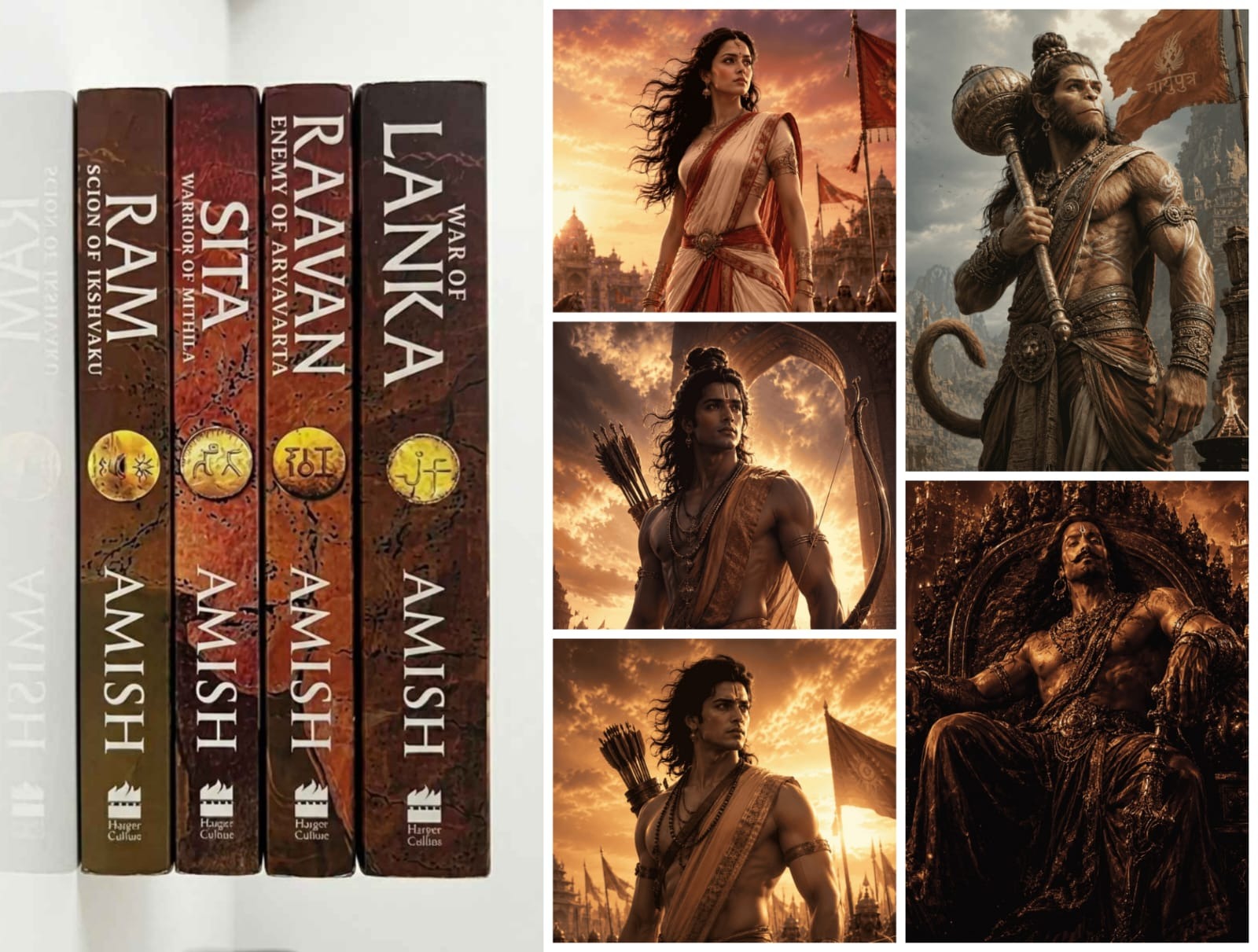
If you are confused about the Ram Chandra series books in order, follow the publication order below. The narrative overlaps intentionally, so reading chronologically can weaken the experience.
| Book | Release Year | Focus |
| Ram: Scion of Ikshvaku | 2015 | Ram’s rise, exile, and dharma |
| Sita: Warrior of Mithila | 2017 | Sita’s leadership and origin story |
| Raavan: Enemy of Aryavarta | 2019 | Raavan’s tragic transformation |
| War of Lanka | 2023 | Final war and resolution |
Each novel revisits the same timeline from a different perspective before converging in the finale.
Also read: Best Ruskin Bond Books: 15 Famous, Underrated & Beginner-Friendly Reads
Ram Chandra Series Explained: How the Story Structure Works
Instead of telling events in straight chronological order, Amish Tripathi uses overlapping narratives. One event may appear in three different books from three different emotional viewpoints.
Ram’s Perspective
In Ram: Scion of Ikshvaku, Ram appears disciplined, restrained, and painfully loyal to dharma. The book opens with Sita’s kidnapping before moving backward into Ayodhya’s political tensions and Ram’s exile. This version of Ram is not emotionally invincible. He doubts himself constantly, especially when duty clashes with compassion.

Sita’s Perspective
Sita: Warrior of Mithila reframes the same universe through strategy and statecraft. Sita is no passive queen here. She trains in warfare, administration, and diplomacy while leading Mithila during political instability. The book changes how readers view major Ramayana events because Sita becomes an active architect of history rather than someone reacting to it.
Raavan’s Perspective
Then comes the twist that changed the franchise. Raavan: Enemy of Aryavarta transforms the classic villain into a tragic antihero shaped by humiliation, ambition, loss, and rage. His journey from exile to Lankan emperor is written with surprising emotional depth. That is why discussions around Why Raavan is the best book in Ram Chandra series still dominate fan communities.
Also read: Arjuna’s Wives: The Real Story Behind His 4 Marriages & Sons
Ram Chandra Series Timeline Explained
The Ram Chandra series timeline explained simply looks like this:
- Ram’s birth in Ayodhya
- Sita’s adoption in Mithila
- Raavan’s exile and rise in Lanka
- Sita swayamvar
- Ram’s exile
- Political tensions across Aryavarta
- Sita’s abduction
- Lanka war
- Raavan’s downfall
The confusing part is that the books revisit these events repeatedly from different angles. For example, Raavan sees himself as misunderstood and justified. Ram sees the same conflict as a moral duty. Sita often sees both sides more clearly than either man. That perspective-based storytelling is one of the strongest elements of the series.
Also read: Ravana’s Mistakes: The Untold Lessons Behind Lanka’s Fallen King
Ram Chandra Series Characters Explained
The strength of the saga comes from its character writing. The Ram Chandra series characters explained below show why the books feel more modern than devotional.
Ram
Ram is driven by absolute dharma. He believes rules protect civilization, even when those rules hurt him personally. His greatest strength is discipline. His greatest flaw is emotional rigidity. That balance makes him compelling because readers can admire him while still questioning his decisions.
Sita
Sita is arguably the most evolved character in the entire franchise. She is strategic, politically sharp, emotionally intelligent, and capable in combat. Rather than existing as Ram’s companion, she shapes kingdoms, alliances, and war outcomes herself. Many readers consider her portrayal the boldest reinterpretation in modern Indian mythological fiction.
Raavan
Raavan is brilliant, artistic, ambitious, and dangerously egoistic. He plays the veena, builds trade empires, understands economics, and deeply loves his family. Yet his obsession with power gradually destroys his judgment. The series works because Raavan never becomes purely evil. He remains painfully human.

See more Mythology Character illustrations on our Pinterest
Lakshman
Lakshman is more aggressive and politically involved than traditional versions of the character. His loyalty to Ram borders on self-destruction, which gives his arc emotional weight.
Hanuman
Hanuman serves as a wise and spiritual counterbalance to the chaos around him. Some readers felt he deserved more page time, especially in War of Lanka.
Also read: Amish Tripathi Books and Best Works: Complete Guide 2026
Biggest Differences Between the Series and the Traditional Ramayana
The Ram Chandra series review conversations often revolve around how different it feels from the original epic.
Humanized Gods
Nobody is divine in the supernatural sense. Ram bleeds. Sita strategizes. Raavan suffers. Their actions feel political and psychological rather than mythic.
Scientific Mythology
Ancient weapons are explained through advanced technology instead of miracles. Biological warfare and engineered weapons replace magical interpretations.
Explore mythological tales on WorldoDelusion Youtube Channel
Political Storytelling
Kingdoms function almost like competing federations. Governance, economics, military alliances, and law become central themes.
Sita’s Expanded Role
Traditional Ramayana often sideline Sita politically. Here, she becomes one of the most capable leaders in Aryavarta. This remains one of the most praised changes in the entire series.
Also read: Stephanie Garber: Complete Guide to Her Magical Books & Universe
Why Raavan Is the Best Book in Ram Chandra Series
Ask fans for the best book in Ram Chandra series, and most will answer: Raavan: Enemy of Aryavarta. The reason is emotional complexity. Raavan’s story feels less like a villain origin and more like a tragedy about talent corrupted by ego. His pain never excuses his actions, but it explains them.
Amish also writes Lanka with incredible atmosphere. The city feels alive—violent, wealthy, cultured, and unstable. Raavan’s internal contradictions carry the novel: Artist and conqueror,Protector and tyrant, and Visionary and destroyer. That layered writing elevated the book beyond a simple mythological retelling.

Ram Chandra Series vs Shiva Trilogy
The debate around Ram Chandra series vs Shiva Trilogy never really stopped.
Here is the simplest comparison:
| Element | Ram Chandra Series | Shiva Trilogy |
| Tone | Political and grounded | Epic and philosophical |
| Storytelling | Multi-perspective | Linear |
| Strength | Character depth | World-building |
| Best Character | Raavan | Shiva |
| Accessibility | Easier for beginners | More immersive overall |
The Shiva Trilogy feels tighter structurally, but the Ram Chandra series arguably takes bigger creative risks. Readers who enjoy layered politics and morally grey characters often prefer Ram Chandra.
Also read: The Immortals of Meluha Summary, Full Story, Characters & Review
Ram Chandra Series Ending Explained
The Ram Chandra series ending explained comes down to one central idea: power without restraint destroys itself. In War of Lanka, Ram finally invades Lanka after Sita’s abduction. The war itself is brutal, strategic, and emotionally exhausting. Raavan loses not because he lacks intelligence or strength, but because arrogance isolates him from truth.
Ram wins, but the victory never feels celebratory. The series repeatedly reminds readers that war damages everyone involved. The finale also reinforces Amish’s version of dharma:
- Duty matters
- Power requires restraint
- Leadership demands sacrifice
- Personal emotion cannot override civilization
Some readers loved the philosophical closure. Others felt the pacing dragged during the war sections. That mixed response explains the divided reception to War of Lanka explained discussions online.
Also read:Lee Cronin’s The Mummy Story Explained: Demon, Egyptian Curse, Ending & True Story Inspiration
Is Ram Chandra Series Worth Reading?
So, Is Ram Chandra series worth reading in 2026? Yes — especially if you enjoy: mythological thrillers, political fantasy, character-driven storytelling, alternate perspectives, and morally complex heroes.
However, traditionalists expecting a faithful Ramayana adaptation may struggle with the reinterpretations. The series works best when approached as speculative mythological fiction rather than religious retelling.
The Ram Chandra series complete guide ultimately reveals why Amish Tripathi’s work became such a major force in modern Indian publishing. The books are not flawless. Pacing dips occasionally. Some dialogue feels overly modern. The final novel divides opinion sharply. But the ambition is undeniable.
Also read: Caraval Book Series Review: Plot, Characters, Themes & Everything you should know
FAQs
What is the correct reading order of the Ram Chandra Series?
The correct order is Ram: Scion of Ikshvaku, Sita: Warrior of Mithila, Raavan: Enemy of Aryavarta, and War of Lanka. Reading in publication order works best because the timelines intentionally overlap.
Is the Ram Chandra Series connected to the Shiva Trilogy?
Yes. The two universes share mythology, tribes, and Vishnu-related lore. While both series can be read separately, longtime readers notice several thematic and world-building connections.
Which is the best book in the Ram Chandra Series?
Most fans consider Raavan: Enemy of Aryavarta the strongest novel because of its emotional depth, complex antihero writing, and darker political storytelling.
Why do readers criticize War of Lanka?
Readers mostly criticize pacing issues, lengthy war sequences, and heavy-handed messaging. Some also felt important characters like Hanuman deserved larger roles.
Is the Ram Chandra Series faithful to the original Ramayana?
Not exactly. It is a reinterpretation rather than a literal adaptation. The books modernize characters, politics, warfare, and motivations while keeping the broad Ramayana framework intact.
Can beginners read the Ram Chandra Series without mythology knowledge?
Yes. The writing is accessible even for readers unfamiliar with the Ramayana. Amish explains the world gradually, making it beginner-friendly compared to denser mythological fiction.
Final Thoughts
By humanizing Ram, empowering Sita, and transforming Raavan into a tragic antihero, the series forces readers to rethink characters they already thought they understood. If the Shiva Trilogy pulled you into mythological fiction, the Ram Chandra series expands that experience into something darker, more political, and often more emotionally layered. And even years later, readers are still debating one question: Was Raavan truly the villain, or just the man who lost the war?