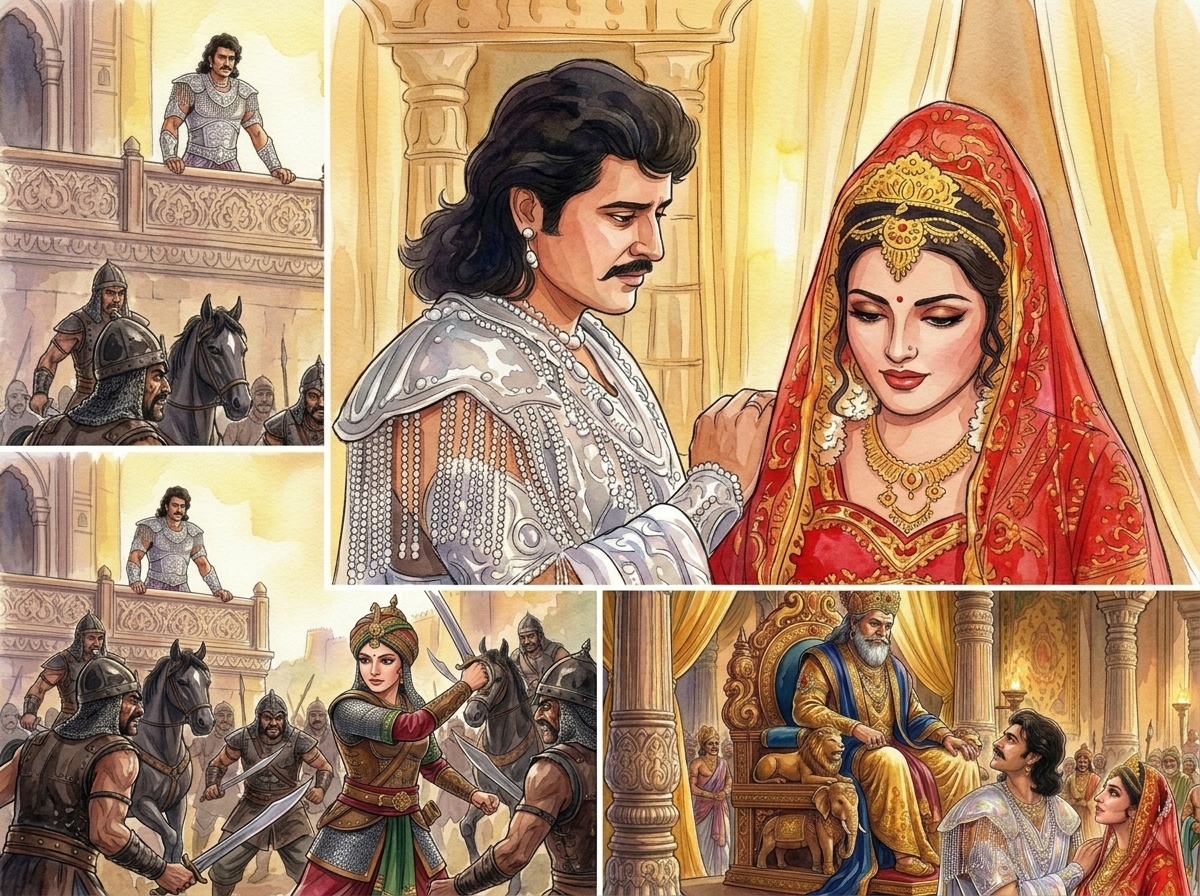
A warrior princess. A powerful heir. And a marriage built on both love and duty. The story of Chitrangada in Mahabharata is not just a romantic subplot—it’s a layered narrative of lineage, dharma, and identity. Unlike typical epic heroines, Chitrangada was trained to rule, fight, and protect her kingdom.
In this post, you’ll discover the Chitrangada and Arjuna story, the real reason why did Arjuna marry Chitrangada, and how this union shaped both personal and political destinies during Arjuna’s exile.
Table of Contents
Overview
The Chitrangada in Mahabharata arc unfolds during Arjuna’s exile—a phase filled with alliances, spiritual growth, and unexpected relationships. This particular story blends romance with royal responsibility, making it one of the most unique Arjuna exile marriage stories in the epic.

See more mythological content on our YouTube
Chitrangada – Princess of Manipur
Chitrangada was the only daughter of King Chitravahana, ruler of ancient Manipur. Unlike conventional princesses, she was raised as a warrior and heir. This wasn’t by choice—it was tradition.
Her lineage followed a rare rule: only one child was born in each generation, blessed by Lord Shiva. That child, regardless of gender, became the successor. This made Chitrangada both princess and future Empress.
She trained in:
- Archery and combat
- Warfare strategy
- Governance and diplomacy
Chitrangada, princess of Manipur, stands out because it challenges the stereotypical roles assigned to women in epics. She wasn’t waiting to be chosen—she was already leading.
Also read: Arjuna and Subhadra: The Love Story That Shaped the Mahabharata
Arjuna exile marriage story: Arjuna’s Exile and Arrival in Manipur
To understand why did Arjuna marry Chitrangada, you need to look at the context.
Arjuna was on a 12-year exile after breaking a vow related to Draupadi. Though his action was justified—he entered the chamber to retrieve his weapons for a righteous cause—he still accepted the punishment. During this exile, Arjuna traveled across kingdoms, forming alliances and gaining divine blessings. One such journey led him to Manipur.
Before Chitrangada, he had already married Ulupi, a Naga princess. This phase of his life is often referred to as the Arjuna exile marriage story, where each union carried deeper purpose beyond romance. Manipur was different—structured, disciplined, and culturally unique. And here, Arjuna met someone who matched his strength.
Also read: Why Did Arjuna Marry Ulupi? The Real Story Behind This Mahabharata Union
Chitrangada and Arjuna story : How Arjuna Met Chitrangada
Arjuna first saw Chitrangada during a public setting—either a festival or while she was practicing combat. She wasn’t dressed like a princess. She looked like a warrior. At first glance, Arjuna mistook her for a male fighter due to her confidence and skill. But once he realized who she was, he was drawn instantly—not just to her beauty, but her strength.
This moment defines the Chitrangada and Arjuna story—a connection built on admiration, not just attraction. Arjuna approached King Chitravahana with a proposal. But the king had a condition.

Also read: Why Bhima Killed Kichaka: The Brutal Justice for Draupadi
Why Did Arjuna Marry Chitrangada? Real Reasons Explained
This marriage wasn’t random—it was deeply layered.
1. Attraction to Strength and Character
Arjuna wasn’t just captivated by beauty. He admired Chitrangada’s warrior spirit and independence. She reflected qualities he valued—courage, discipline, and honor.
2. Respect for Local Tradition
King Chitravahana followed the Putrika Dharma—a system where the daughter’s son inherits the throne.The condition was clear: Any son born from this marriage would stay in Manipur and rule. Arjuna agreed. This decision answers a big part of why did Arjuna marry Chitrangada—he respected her identity and her kingdom’s customs.
3. Dharma Over Desire
Arjuna’s life was guided by dharma. Instead of taking Chitrangada away, he chose to support her role as future ruler. This made the marriage balanced—not possessive.
4. Political and Cultural Alliance
Though not explicitly strategic, the union strengthened ties between kingdoms. In the larger Chitrangada in Mahabharata narrative, such alliances often shaped future events.
Also read: Ramayana/ Mahabharata Character Analysis: Crownless Legends of Indian Epic Characters
The Condition: Son Must Stay in Manipur
The most defining aspect of this marriage was the heir condition. Their son, Babruvahana, would:
- Inherit Manipur’s throne
- Stay away from Hastinapura
- Continue Chitrangada’s lineage
Arjuna accepted this without resistance.This wasn’t sacrifice—it was alignment with dharma. He stayed in Manipur for about three years before continuing his exile journey.

Also read: Discover 3 Hidden Krishna Leelas That Explain Love, Ego, and True Devotion
Chitrangada and Arjuna story – What Happened After the Marriage?
After the birth of Babruvahana, Arjuna left to complete his exile. Chitrangada stayed back and raised their son as a warrior king. Years later, during the Ashvamedha Yagna, Arjuna’s horse entered Manipur. Babruvahana, unaware of his father’s identity, challenged him. In the battle:
- Babruvahana defeated Arjuna
- Arjuna was fatally struck
- Ulupi later revived him using a mystical gem
This moment is one of the most dramatic turns in the Chitrangada in Mahabharata arc—blending fate, curse, and redemption. Eventually, the family reunited.
Also read: Ashwatthama’s Gem: The Curse That Changed Everything
Did Arjuna Truly Love Chitrangada?
Yes—but it wasn’t a conventional love story. Their relationship was built on:
- Mutual respect
- Emotional understanding
- Acceptance of duty
Arjuna didn’t try to change her path. Chitrangada didn’t demand abandonment of his duties.Their bond was quiet but strong—something often overlooked in epic narratives.
Chitrangada in Mahabharata: Her Role and Symbolism
Chitrangada represents a different kind of strength.Not dramatic. Not loud. But deeply rooted. She symbolizes:
- Female leadership in ancient narratives
- Balance between personal desire and duty
- The importance of lineage and cultural identity
Her story also gained new depth through Rabindranath Tagore’s Chitra, where her internal struggle and self-worth are explored further. In the larger epic, she may not dominate the battlefield—but she defines legacy.
Also read: Arjuna as Brihannala: The Tale of Duty, Disguise, and Transformation in Hindu Mythology
FAQs
Why did Arjuna marry Chitrangada in Mahabharata?
Arjuna married Chitrangada because he admired her strength, beauty, and warrior nature. He also respected her kingdom’s tradition, agreeing that their son would inherit Manipur. The marriage balanced personal attraction with duty, making it a meaningful union during his exile.
Who was Chitrangada in Mahabharata?
Chitrangada was the warrior princess of Manipur and daughter of King Chitravahana. Raised as the sole heir, she was trained in warfare and governance. Her story highlights female leadership, making her one of the most unique characters in the Mahabharata.
What was the condition for Arjuna to marry Chitrangada?
The condition was that their son would remain in Manipur and become its king. This followed the Putrika Dharma tradition. Arjuna accepted this, prioritizing dharma and respecting the kingdom’s lineage system.
Who was the son of Arjuna and Chitrangada?
Their son was Babruvahana, who later became the king of Manipur. He was raised by Chitrangada and played a crucial role in the Ashvamedha Yagna episode, where he unknowingly fought and defeated Arjuna.
Did Chitrangada go with Arjuna to Hastinapura?
No, Chitrangada stayed in Manipur to rule and raise her son. However, after the Kurukshetra war and later events, she eventually visited Hastinapura and fulfilled her duties toward the royal family.
Final Thoughts
The story of Chitrangada in Mahabharata isn’t just about marriage—it’s about identity, respect, and choices. Arjuna didn’t just marry her—he honored her role. Chitrangada didn’t follow him—she led her kingdom. That balance is what makes this story timeless.
If you look beyond the main war narratives, the Chitrangada and Arjuna story offers a rare perspective on relationships built on equality and dharma.Want more such deep dives into untold Mahabharata stories? Explore more and uncover the layers most people miss.