The Great Flood Netflix arrives as one of Netflix’s most ambitious Korean genre releases, blending large-scale disaster spectacle with cerebral sci-fi themes. Set against a near-future climate catastrophe, the film positions itself not just as survival entertainment, but as a thought experiment on technology, humanity, and choice.
Table of Contents
Within its first 100 minutes, The Great Flood Netflix makes it clear this is not a conventional disaster movie—and that creative gamble is exactly why it’s trending.
Why The Great Flood Is Trending on Netflix
Several converging factors have pushed The Great Flood Netflix into strong global discovery momentum:
- A global Netflix release on 19 December 2025, timed for year-end binge traffic
- A high-profile Korean cast led by Kim Da-mi and Park Hae-soo
- A genre pivot from disaster spectacle into dark, philosophical sci-fi
- Polarising early reviews, driving debate rather than passive consumption
The result: elevated visibility across entertainment searches and “People Also Ask” queries related to Korean sci-fi and Netflix originals.
Also Read: Netflix Warner Bros Acquisition: Netflix Letter to 300 Million Subscribers Explained – WorldoDelusion
The Great Flood Netflix Release Date and Streaming Details
The Great Flood release date is officially locked for 19 December 2025, with a worldwide rollout on Netflix.
Key release details:
- Platform: Netflix
- Release date: 19 December 2025
- Director: Kim Byung-woo
- Runtime: 108 minutes
- Language: Korean

The film premiered earlier at the Busan International Film Festival, where Kim Byung-woo framed the project as a response to modern climate anxiety fused with speculative technology. Netflix has positioned the title as part of its expanding Korean sci-fi slate, following the global performance of genre-bending K-content.
Also Read: Exclusive Truth Report: Actual Kis Kisko Pyaar Karoon 2 Budget & Cast Fees Revealed—Not the Rumors – WorldoDelusion
The Great Flood Plot Explained (Spoiler-Light)
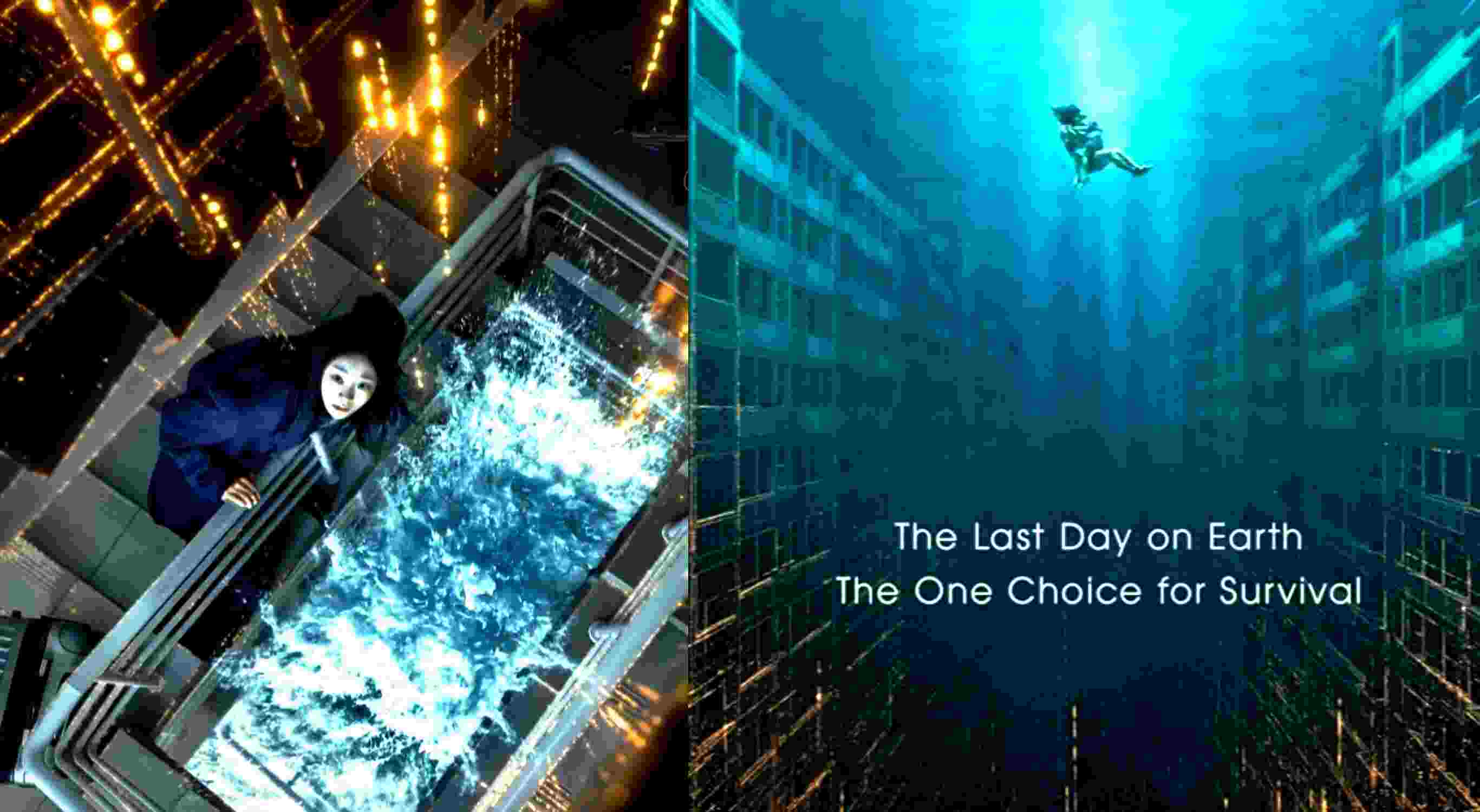
The Great Flood plot unfolds in a near-future Seoul after an asteroid impact in Antarctica triggers catastrophic sea-level rise. Entire residential towers are submerged within hours, turning survival into a vertical race against time.
At the center is An-na, an AI researcher and single mother, trapped in a flooding high-rise with her young son. As rescue systems fail, each ascending floor becomes a temporary refuge. What initially plays as a grounded disaster narrative slowly mutates into something far more unsettling.
The arrival of Hee-jo, a security officer linked to An-na’s past research, reframes the catastrophe. His presence suggests that her AI work may not only predict disasters—but simulate human behavior itself. From that point forward, the flood operates on two levels: physical destruction and philosophical threat.
This layered approach is why The Great Flood Netflix 2025 release date and plot explained has become a high-intent search phrase among sci-fi and disaster film audiences.
The Great Flood Cast and Performances
- Kim Da-mi as An-na, delivering a restrained, emotionally grounded performance
- Park Hae-soo as Hee-jo, anchoring the film’s ethical and psychological tension
The performances keep the story credible even when the narrative shifts into abstraction—an essential stabilizer for a film that deliberately avoids easy answers.
The Great Flood Review: What Works and What Divides
The Great Flood review consensus is clear on one thing: this is not a comfort-watch.
What Works
The film excels in claustrophobic flood sequences, using confined spaces and silence to generate tension. Kim Da-mi’s performance grounds the story, while the sci-fi concepts push beyond what disaster films usually attempt.
What Doesn’t
The tonal shift mid-film is abrupt. Dense AI exposition replaces forward momentum, and some viewers may feel emotionally distanced once the narrative pivots toward simulation theory.
Critics broadly agree the first half is gripping and urgent, while the second half trades immediacy for ideas. That creative decision explains why The Great Flood Korean sci-fi disaster movie review discourse is sharply divided.
Also Read: Avengers Doomsday Teaser Leaked Online Reality: Captain America, Thor & Doctor Doom Revealed?
Is The Great Flood Worth Watching on Netflix?
This is the defining question driving engagement: Is The Great Flood worth watching on Netflix?
If you’re expecting a linear, effects-driven disaster spectacle, expectations should be recalibrated. This film prioritizes provocation over reassurance. For viewers open to slow-burn sci-fi layered on top of catastrophe, the payoff is intellectual rather than emotional.
That risk profile is exactly why the movie is being discussed more than consumed passively.
Also Read: Border 2 Official Teaser Out: Check Cast, Plot and Honest Public Reaction
FAQs
When is The Great Flood released on Netflix?
The Great Flood is released globally on Netflix on 19 December 2025.
What is The Great Flood movie about?
The film follows a near-future flood disaster in Seoul, focusing on a mother and son trapped in a high-rise while an underlying AI narrative reframes the catastrophe as a philosophical crisis.
Is The Great Flood a sci-fi or disaster movie?
It starts as a disaster movie but increasingly shifts into psychological and speculative sci-fi.
Is The Great Flood worth watching?
Yes—if you value ambitious, idea-driven cinema over straightforward disaster thrills.
Where can I watch The Great Flood online?
You can watch The Great Flood exclusively on Netflix, which answers the high-intent query: where to watch The Great Flood streaming.
Final Thoughts
The Great Flood Netflix isn’t built for passive viewing. It’s bold, uneven, and deliberately cerebral—more interested in sparking debate than delivering safe spectacle. This is a Korean sci-fi disaster film that trades instant gratification for long-term impact, leaving audiences dissecting its ideas well after the credits roll.
If you track Netflix trends, Korean cinema, and genre films that challenge the algorithm instead of feeding it, follow us. We don’t just report what’s streaming—we break down why it matters, what it signals, and where entertainment is headed next.
Follow us: